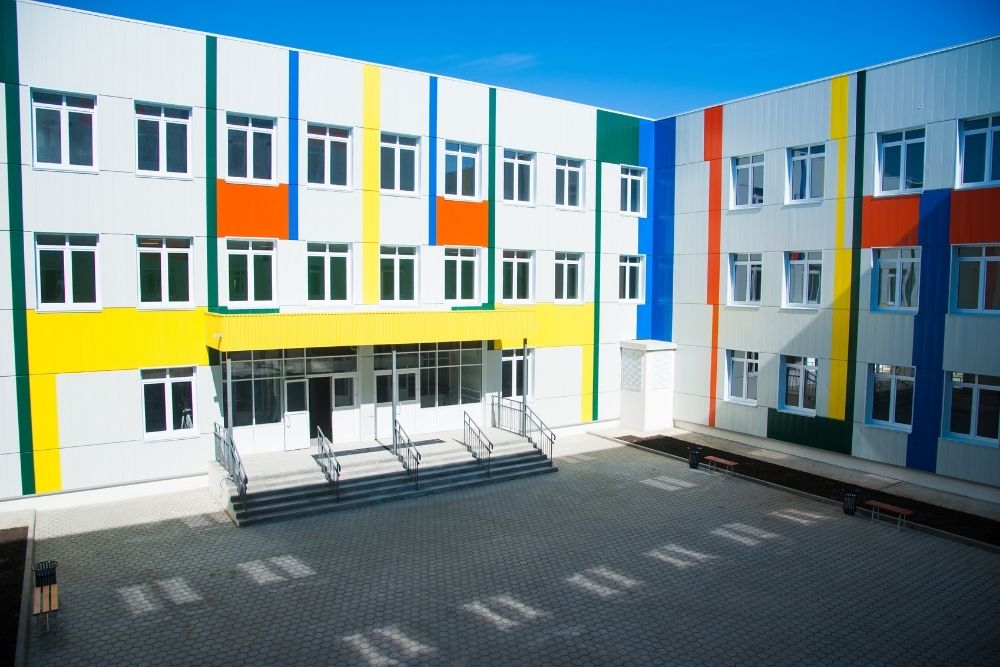
Educational construction involves strict safety protocols, complex permitting, and careful scheduling — especially when campuses remain active. Proper planning ensures minimal disruption and maximum student safety.
1. Begin With Long-Term Educational Needs
School boards should identify capacity requirements, classroom types, athletic needs, and future growth projections to ensure the project meets long-term academic goals.
2. Plan Around Academic Calendars
Many institutional projects involve phased construction during summer breaks, holidays, or evenings. Proper scheduling reduces impact on students and staff.
3. Implement Strict Safety and Access Controls
Construction zones near children require additional fencing, restricted areas, security supervision, and coordinated traffic flow. Compliance with Florida building and safety regulations is non-negotiable.
4. Expect Complex Code Compliance
Fire safety, ADA accessibility, mechanical systems, and environmental controls must meet higher institutional standards. Expert construction management reduces delays and compliance risks.
5. Ensure Clear Communication With Stakeholders
Teachers, parents, district leaders, and maintenance staff should be kept informed. Transparent communication builds trust and supports smooth project execution.